
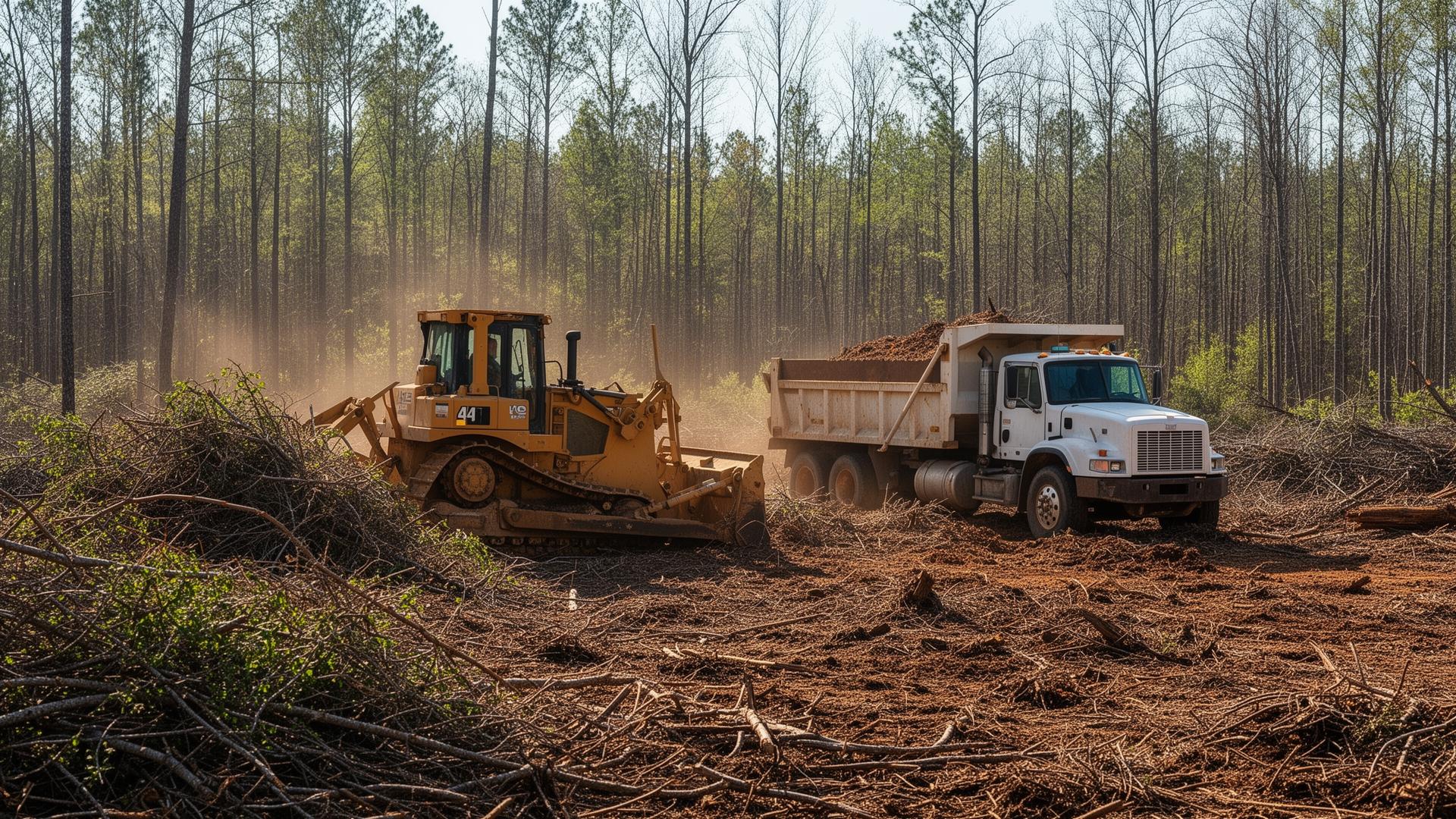
Most land clearing around Memphis runs somewhere between $1,000 and $12,000 per acre. Open pasture with light brush that can be mulched in place sits at the bottom of that range. A fully wooded acre that has to be cut, stumped, hauled off, and graded flat sits at the top, and occasionally above it.
That is a wide spread, and the reason is simpler than most people expect. Two things decide your number: what is growing underneath the trees, and how much of it has to leave the property. Everything else - acreage, slope, access, permits - adjusts the figure at the margins. Those two drive it.
Here is how that breaks down on real West Tennessee properties, what the state and county actually require before a machine touches the dirt, and how to tell whether the quote in your hand is fair.
What Land Clearing Actually Costs Per Acre Around Memphis
| What the property looks like | Typical method | Planning range per acre |
|---|---|---|
| Open or lightly overgrown - grass, briars, saplings under 4" | Forestry mulching, mulch stays on site | $1,000 - $2,000 |
| Moderate - heavy honeysuckle or privet understory, scattered trees under 8" | Forestry mulching, heavier passes | $2,000 - $3,500 |
| Wooded - mature hardwoods, closed canopy | Cut and drop, grind debris on site | $3,500 - $6,500 |
| Full clear - stumps out, debris hauled off, graded to pad | Excavator, haul-off, finish grade | $6,500 - $12,000+ |
Treat these as planning ranges, not quotes. They are the bands we see across Shelby and Tipton County work and they are consistent with published Tennessee figures. But a five-acre tract can straddle three of these tiers at once - the front two acres open pasture, the back three a wall of privet - and that is exactly why a walkthrough beats a phone estimate every time.
One thing worth noticing in that table: the biggest jump is not between "moderate" and "wooded." It is between grinding debris on site and hauling it away. That single decision often moves a bid more than the trees do.
The Five Things That Move the Number
Density and understory. Not tree count - what is under the trees. A stand of mature oak with a clean floor is fast work. The same stand choked with honeysuckle and privet can double the machine hours, because the mulcher has to work the understory before it can even reach the trunks.
Tree size and species. Under 8 inches, a forestry mulcher takes trees down whole. Above that, you are into cut-and-process work with an excavator, and the cost curve turns sharply upward. West Tennessee bottomland hardwoods - sweetgum, hackberry, water oak - carry heavy root balls that fight back when stumps come out.
Where the debris goes. The largest single variable in most bids. Covered in detail below.
Access and slope. A tract you can drive a lowboy onto prices differently than one where equipment walks in a quarter mile. Slope matters less here than in East Tennessee, but the loess bluffs along the Mississippi and the ravines cutting through Tipton County can surprise you.
Whether stumps come out. Mulching leaves the root mass in the ground. That is fine for pasture, trails, hunting land, or improving a view. It is not fine under a building pad or a septic field. Stump removal is close to a separate job, and it is the line item people most often forget to ask about.
Why West Tennessee Land Costs More to Clear Than East Tennessee Land
This is the part almost nobody puts in writing, and it matters if you are comparing a Memphis quote against a number you found online.
USDA Forest Service inventory data found Japanese honeysuckle on 81% of forested plots in West Tennessee - the highest rate of any region in the state. East Tennessee came in at 50%. The Cumberland Plateau at 30%. Chinese and European privet showed up on another 26% of West Tennessee plots.
Read that again, because it changes how you should interpret every national cost calculator you find. Four out of five wooded acres in this part of the state carry an invasive understory that a Knoxville or Nashville property statistically does not. Honeysuckle does not just occupy space - it climbs, it mats, and it wraps the lower trunks so the mulcher has to make multiple passes at ground level before it can work upward.
When someone in Millington gets a bid that runs higher than the "average" they read on a national home services site, this is usually why. The number is not padded. The acre is harder.
Kudzu, for what it is worth, gets far more attention than it deserves here - the same survey found it on only 19 plots statewide. Honeysuckle is the real problem, and it is quiet about it.
Mulch It, Grind It, or Haul It
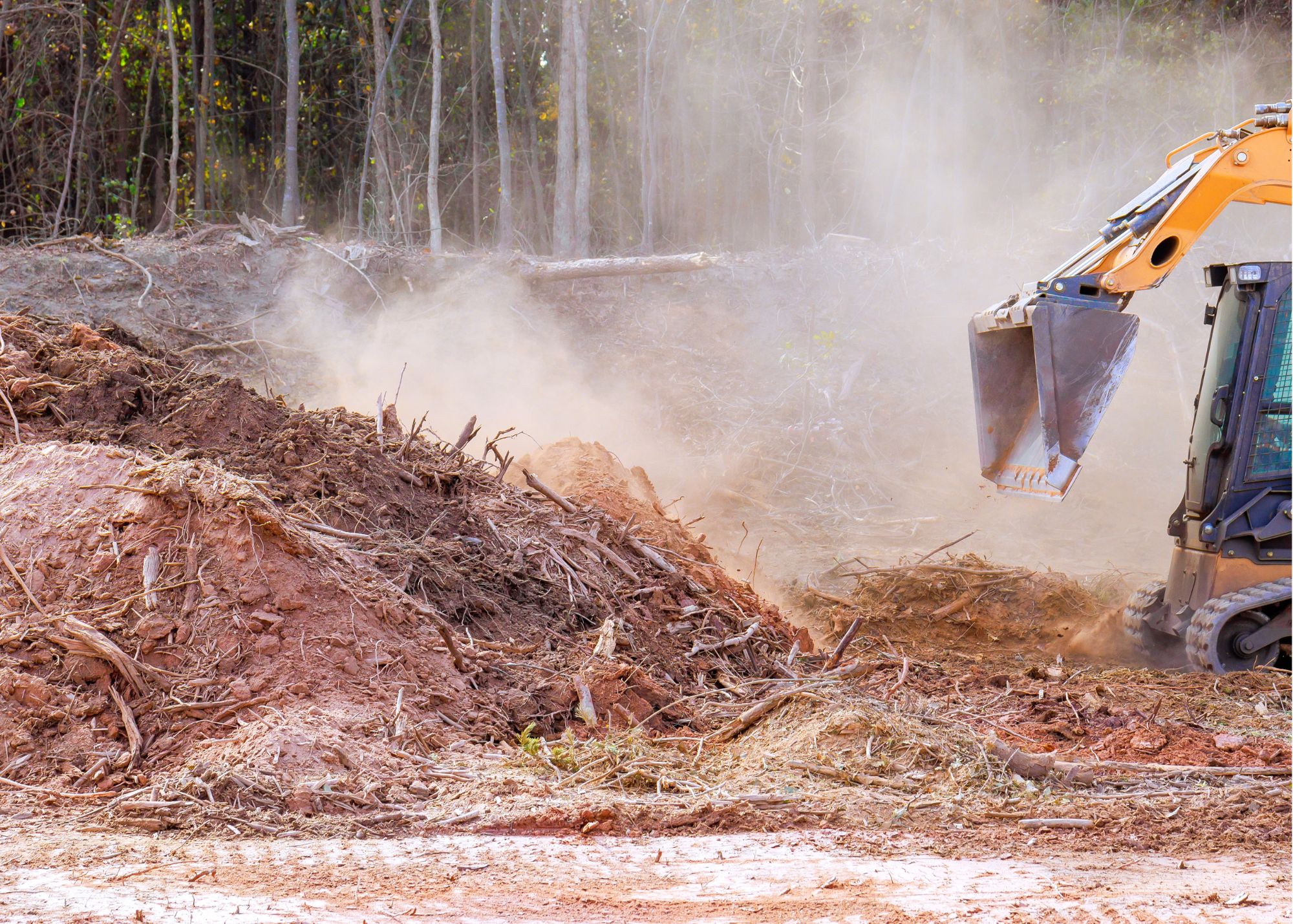
Every cleared acre produces an enormous volume of woody material, and what happens to it is usually the biggest swing in your bid.
| Approach | What happens | Cost impact | Best for |
|---|---|---|---|
| Forestry mulching | Material is ground where it stands and left as ground cover | Lowest - no trucking, no tipping fees, no stump holes to backfill | Pasture, trails, view clearing, hunting land, erosion-prone slopes |
| Grind on site | Debris is piled and processed through a horizontal grinder; mulch stays or gets loaded | Moderate - one machine mobilization, big volume reduction | Larger tracts, storm debris, sites needing a clean finish without full haul-off |
| Haul off | Everything is loaded and trucked to a disposal site | Highest - trucking and tipping fees stack up fast | Building pads, commercial sites, anywhere the ground has to be clean |
| Burn | Piled and burned on site under permit | Low cash cost, high regulatory friction and weather risk | Rural tracts, outside the Oct 15 - May 15 permit window or with a permit in hand |
Forestry mulching is the cheapest path for a reason that has nothing to do with labor: you are not paying to move material. No trucks, no tipping fees, and the mulch layer that stays behind holds soil in place through the winter rains instead of leaving you with bare ground.
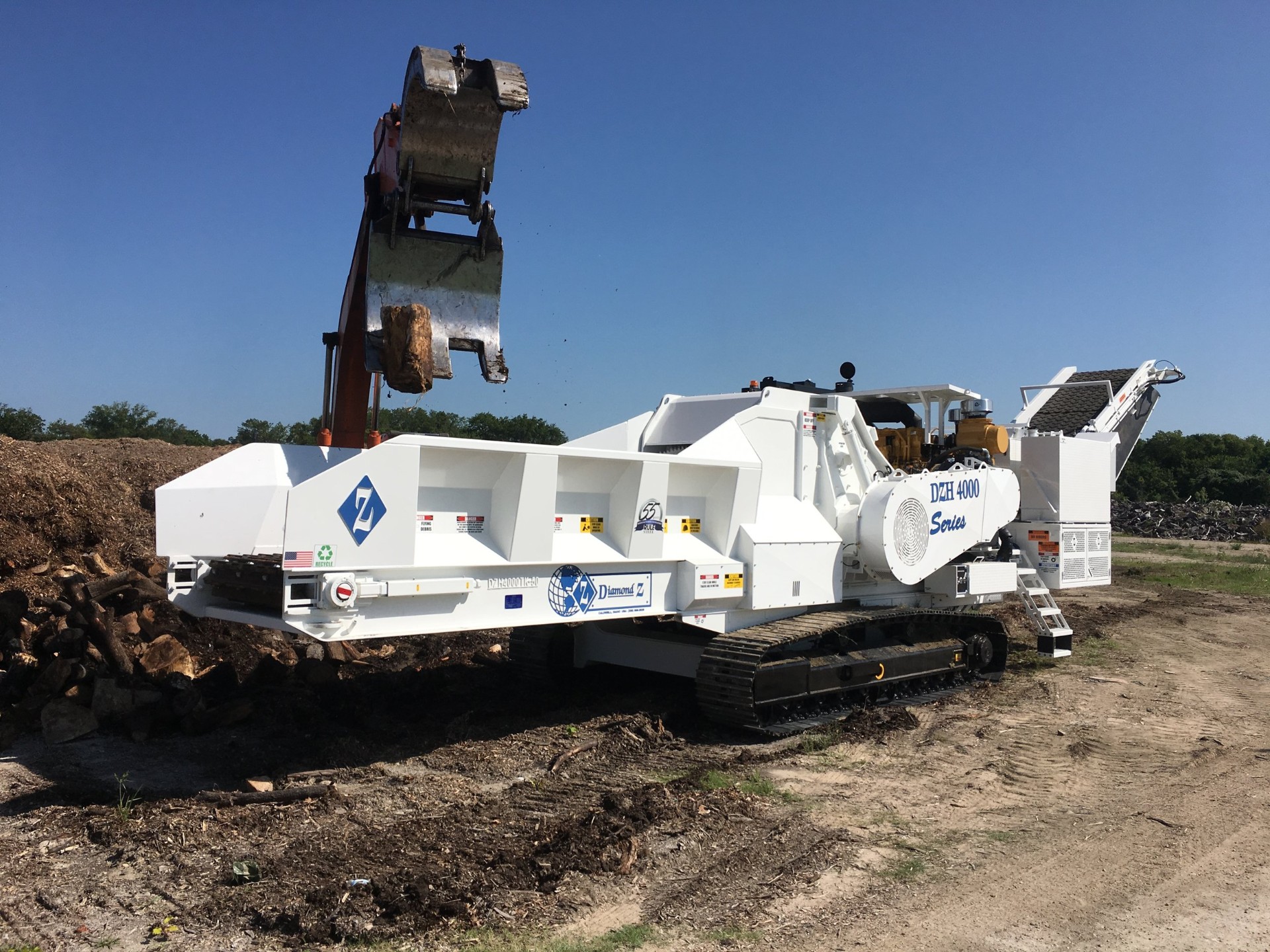
For bigger jobs, high-capacity grinding splits the difference. We run a Diamond Z horizontal grinder, which means whole trees, root balls, and mixed storm debris get processed on site rather than trucked out by the load. On acreage work the reduction in truck traffic alone is often the difference between two bids.
Haul-off is unavoidable when the ground has to be genuinely clean - a building pad, a commercial site, a lot with an existing structure that also needs demolition. Just know going in that it is the expensive option, and ask any contractor quoting it how many loads they are estimating.
Permits and Rules That Affect Your Bid in West Tennessee
Permitting is where do-it-yourself land clearing projects go sideways, and where a contractor's local knowledge earns its keep.
The one-acre stormwater trigger. Tennessee requires coverage under the state's construction stormwater general permit for any clearing, grading, or excavation that disturbs one acre or more. That means a Notice of Intent filed through MyTDEC Forms and a site-specific Stormwater Pollution Prevention Plan. Fees run $250 for projects between 1 and 5 acres and $1,000 for 5 to 20 acres, with annual maintenance fees on anything running longer than a year.
The trap most people miss: the permit also applies to sites under one acre if they are part of a larger common plan of development or sale. Clearing a half-acre lot in a subdivision that is being built out in phases still triggers it. Getting this wrong is not a paperwork problem - it is a stop-work-order problem.
This is also why erosion control belongs in the conversation early rather than after the fact. Silt fence, check dams, and stabilized construction entrances are part of the SWPPP, not an add-on.
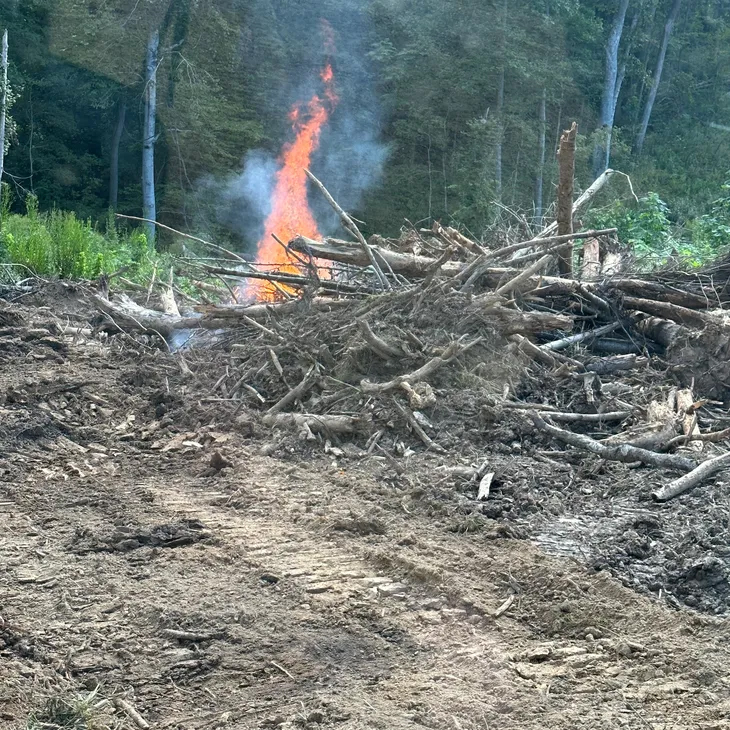
Burn permits. Tennessee requires a debris burn permit from the Division of Forestry every year from October 15 through May 15. The permit is free. The rules are not flexible: natural materials from your own property only, burning household trash is never legal in Tennessee, and you have to stay with the fire until it is completely out. Individual counties and cities layer on their own restrictions, so check locally before you plan around burning.
Worth knowing if you are timing a project: that window covers exactly the months when clearing conditions are best, so burning is a realistic disposal option for rural tracts in Tipton, Fayette, Lauderdale, and Haywood counties - but it comes with weather delays that grinding does not.
Demolition, if there is a structure. Memphis and Shelby County charge demolition permit fees at $9.00 per 25,000 cubic feet, with a $70 minimum and a $560 cap. Small relative to the work itself, but it is a separate permit from anything land-clearing related, and it has its own timeline.
When to Clear: The Cheapest Window in West Tennessee
If your project has any flexibility at all, late fall through early spring is the best time to clear land in West Tennessee - and the reasons are practical, not seasonal marketing.
You can see what you're dealing with. Once honeysuckle and privet drop their leaves, the actual density of a tract becomes visible. Estimates get more accurate, and fewer surprises mid-job means fewer change orders.
The ground behaves. Memphis-area soils are loess - deep, silty, wind-deposited, less than 5% sand. It drains reasonably well, but when it is saturated it turns greasy under tracks, and runoff on any slope goes from medium to very high in a hurry. Dormant-season ground supports equipment better and leaves less rutting to repair.
No leaf mass to process. The same acre with leaves off is measurably faster to mulch.
The burn window is open. October 15 to May 15, as above.
The practical implication: book in late summer for fall and winter work. Calling in January means getting in line behind everyone else who waited, in the season everyone wants. The crews with the right equipment fill up first.
One caveat. If your clearing is going straight into construction, plan the grading and drainage work as part of the same sequence rather than a separate project months later. Bare loess through a Mid-South winter will move on you, and fixing that costs more than doing it in order.
How to Read a Land Clearing Quote Without Getting Burned
A quote that says "clear 3 acres - $9,000" tells you nothing. A real bid separates the work, because the work is separable. Look for:
- Method, stated plainly. Mulching, cut-and-grind, or full removal? These are different jobs at different prices.
- Debris disposal, priced as its own line. If it is not itemized, ask. It is usually the largest variable in the whole bid.
- Stumps - in or out. The single most common source of "I thought that was included."
- Finish condition. Mulched rough, cleared to dirt, or graded to a pad? Say it in writing.
- Permits - who files and who pays. For anything over an acre, this is a real cost with a real timeline.
- Erosion control. Required by the SWPPP on permitted sites. If it is missing from the bid, the bid is incomplete.
- Access and mobilization. Equipment moves cost money whether the machines are running or not.
And two questions worth asking directly: Do you own the equipment or are you subbing it out? and Are you insured, and can I see the certificate? Both answers tell you a great deal about how the job will actually go.
What We'd Need to See to Give You a Real Number
Honest answer: nobody can price your acreage from a table, including us. What decides your number is the understory density, the tree size mix, how the debris leaves, and whether stumps come out - and those take a walk across the property to assess properly.
Modern Shovel is based in Millington and owned by Austin Scott. We own our equipment, including the Diamond Z grinder, which is why we can quote grinding on site instead of pricing in a subcontractor's mobilization. We're fully insured, licensed and bonded, and we hold a 5-star rating across 30+ Google reviews.
We'll walk your property, tell you honestly which tier it falls into, and put the whole thing in writing with the debris and stump decisions priced separately so you can see what you're actually paying for. If forestry mulching gets you where you need to go for half the cost of a full land clearing job, we'll tell you that too.
Call (901) 479-0236 or request a free estimate. We cover Memphis, Millington, Bartlett, Arlington, Collierville, Germantown and Lakeland in Shelby County, Atoka, Munford, Brighton and Covington in Tipton County, and out into Fayette, Lauderdale and Haywood - see our full service area.
If you're planning fall or winter work, now is the time to get on the schedule.
Frequently Asked Questions
How much does it cost to clear one acre of land?
In West Tennessee, expect roughly $1,000-$2,000 per acre for light brush mulched in place, $2,000-$3,500 for a heavy honeysuckle or privet understory, $3,500-$6,500 for mature wooded acreage ground on site, and $6,500-$12,000+ for a full clear with stumps removed and debris hauled off. The understory and the debris plan drive most of that spread.
Is forestry mulching cheaper than traditional land clearing?
Usually, yes - often substantially. Mulching grinds material where it stands, so you pay no trucking, no tipping fees, and no backfill for stump holes. The tradeoff is that root masses stay in the ground, which is fine for pasture, trails, or view clearing but not acceptable under a building pad or septic field.
Do I need a permit to clear land in Tennessee?
If you're disturbing one acre or more, you need coverage under the state construction stormwater permit - a Notice of Intent through MyTDEC Forms plus a SWPPP. Fees start at $250 for 1-5 acres. Smaller sites also need it if they're part of a larger common plan of development. Separately, burning debris requires a free Division of Forestry permit between October 15 and May 15.
What is the cheapest way to clear land?
Forestry mulching, in almost every case where leaving the root system is acceptable. It eliminates the two biggest costs in conventional clearing - hauling and stump removal - and the mulch layer left behind protects the soil through winter rains rather than leaving you with bare, erodible ground.
When is the best time of year to clear land in West Tennessee?
Late fall through early spring. Leaves are off so density is visible and estimates are accurate, the ground supports equipment better, there's no leaf mass to process, and the burn permit window is open. Book in late summer for fall and winter work - the dormant season fills up quickly.
Get a Free Land Clearing Estimate
We'll walk your property, tell you which tier it actually falls into, and give you a written estimate with debris and stump work priced separately. Call (901) 479-0236 or request a quote online.
Sources: USDA Forest Service, Invasive Plants Found in Tennessee Forests, 2009 Forest Inventory & Analysis (SRS-33); Tennessee Department of Environment and Conservation, NPDES Stormwater Construction Permit; Tennessee Department of Agriculture, Division of Forestry; Memphis & Shelby County Office of Construction Code Enforcement fee schedule; USDA Official Series Description, MEMPHIS soil series.