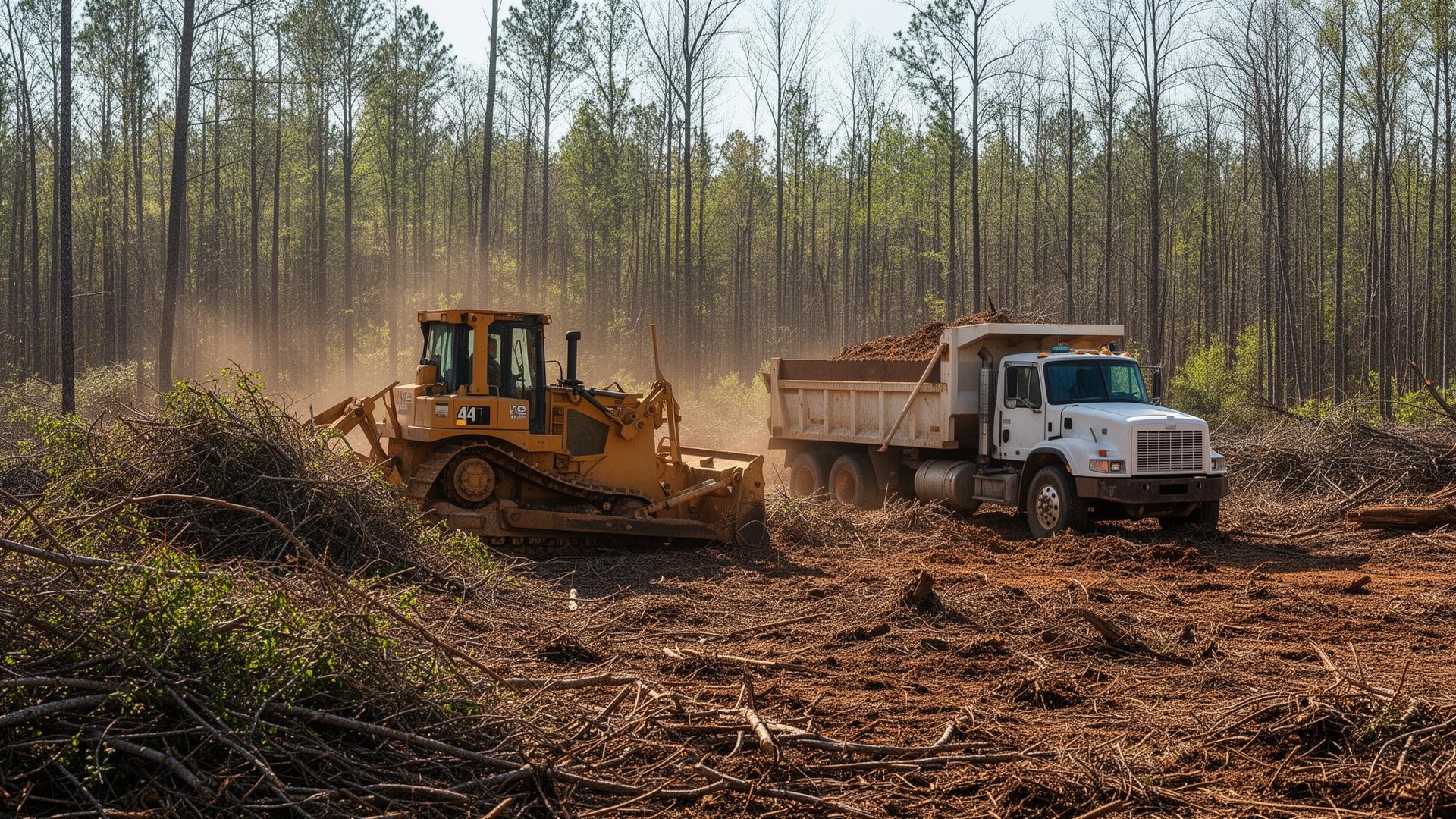


Most national guides land on roughly $3,000 to $8,000 to demolish and haul off a mobile home, or about $4 to $6 per square foot. Those numbers are close enough to start a budget with around Memphis.
What they leave out is the part that actually decides your timeline: in Shelby County, tearing down a structure is a four step process, one of those steps costs $130 and has a ten working day waiting period, and it applies whether or not there is any asbestos in the home. Burning the trailer instead is not a shortcut here, and the title stays in your name until you do something about it.
Here is what a mobile home teardown really costs in West Tennessee, which office handles which piece of it, and the two steps owners most often find out about after the machine is already booked.
Why the Published Prices Disagree by a Factor of Ten
Search this and you will get numbers that cannot all be true at once. One guide says $3,000 to $5,000 for a single wide. A Southern California contractor's page says $8,000 to $18,000 for the same thing. Another site opens at $10,000 and runs to $35,000.
They are not contradicting each other so much as describing different jobs in different markets. Labor, landfill tipping fees and access costs are wildly different between a California mobile home park and a half acre off a county road in Tipton County, and some of those quotes include asbestos abatement, foundation removal and site grading while others are the teardown alone.
The ranges most often cited for an ordinary teardown with debris hauled to a construction and demolition landfill:
| Line item | Commonly published range |
|---|---|
| Single wide, demolished and hauled | $3,000 to $5,000 |
| Double wide, demolished and hauled | $5,000 to $8,000 |
| Rule of thumb by size | About $4 to $6 per square foot |
| Asbestos or lead paint handling | Adds $1,000 to $3,000 |
| Removing a slab or permanent foundation | Adds $1,500 to $3,500 |
| Permits and notifications | $100 to $500 nationally |
Three things move a West Tennessee quote inside that range more than anything else. Access, because a trailer at the end of a soft dirt track in February is a different job from one beside a paved drive. What is still inside it, since furniture, appliances and a floor of abandoned belongings are all tonnage you are paying to haul. And what is underneath: block piers and tie downs come out easily, a poured slab does not.
We quote the actual property rather than the square footage, because the three things above are not visible from a number.
In Shelby County, a Demolition Is Four Steps
This is the part no national cost guide covers, and it is the reason a job that sounds like a one day teardown takes three weeks to start.
Memphis and Shelby County run their own air pollution control program through the Shelby County Health Department rather than through the state. The Department's own instruction sheet lists the sequence plainly: demolitions require four steps. A notification and fee to the Health Department, an asbestos survey, asbestos removal, and then a demolition permit from Shelby County Code Enforcement.
Step one: the notification, and the ten working days
A Notification of Asbestos Demolition or Renovation has to be filed with the Health Department's Pollution Control Section at least ten working days before any demolition activity, with a $130 notification fee that is charged per notification and is not refundable. The form is filled out, signed and submitted by the contractor actually doing the demolition, not by the owner.
Ten working days is two full calendar weeks before a machine can legally touch the home. Build that into the schedule rather than discovering it on the day you wanted to start.
Step two: the asbestos survey
An asbestos survey is required before any demolition, conducted by an accredited person. This matters more for mobile homes than most people expect. Homes built before the 1980s can carry asbestos in floor tile, sheet flooring and backing, duct wrap, siding and roofing products, which is why the national guides list $1,000 to $3,000 for abatement as a line item rather than an unusual event.
There is one break for houses. The Department's rules require regulated asbestos material to be removed before all demolitions except single residential structures. The survey and the notification still apply. The removal requirement is what is relaxed, and that is a decision for the Department and your contractor, not an assumption to make on your own.
Step four: the demolition permit, and who is allowed to pull it
The Memphis and Shelby County Office of Construction Code Enforcement issues the demolition permit, and it will not issue one without an asbestos letter from the Health Department. You will also need a site plan and the cubic feet of the structure, which is simply length times width times height.
Two details on that permit are worth knowing before you shop the job:
- Both commercial and residential demolitions require a licensed demolition contractor, specifically not a general contractor. A builder you already use is not automatically eligible to pull this permit.
- A homeowner may do residential work themselves, but has to post a $300 refundable cash bond, no personal checks, on top of the permit fee. The bond comes back after the demolition is finished, the lot is cleaned and the sewer is recapped. Ask for the refund form when you post it.
The permit fee itself is small. Residential demolitions run a minimum around $75, scaled by cubic feet. The fee was never the expensive part. The ten working days and the contractor requirement are.
No, You Cannot Just Burn It
This comes up on nearly every rural trailer we look at, and the answer is firmer than people expect.
Tennessee's open burning regulation prohibits open burning except where specifically excepted, and it expressly prohibits burning tires and other rubber products, vinyl shingles and siding, other plastics, asphalt shingles and other asphalt roofing materials, and asbestos containing materials. The rule goes further and says those materials shall not be included in any open burning at all.
Read that list next to what a mobile home is made of. Vinyl siding, asphalt shingles and plastics are not incidental parts of the structure, they are most of its skin. There is an exception allowing fires that dispose of structural and household materials, but it applies only when the structure was destroyed or severely damaged by a natural disaster, and even then the expressly prohibited materials have to be pulled out before ignition.
On top of that, burning does not get you out of the paperwork. The Shelby County asbestos code defines demolition as wrecking or taking out a load supporting structural member or the intentional burning of a structure, and the Department states that demolition by intentional burning requires the same four steps. Burning a trailer is a demolition with a fire instead of an excavator, and it is the one version where the materials themselves are illegal to burn.
Worth separating from the burn permit you may already know about. The free Division of Forestry permit that opens October 15 and runs through May 15 covers burning vegetative debris, the brush and limbs that come off a land clearing job. It is not permission to burn a building.
Outside Shelby County, the State Takes the Notification
In Tipton, Fayette and the rest of West Tennessee, the notification goes to the Tennessee Department of Environment and Conservation's Division of Air Pollution Control instead of to a county health department.
The form is CN-1055, Notification of Demolition and/or Asbestos Renovation Activity, emailed to the state's Asbestos NESHAP Program, and the form itself is explicit on the point people get wrong: it is required for all demolition projects, including intentional burning, even if no asbestos is present at the site. Same ten working day lead time.
The local building permit is separate and depends on where the property sits. Tipton County handles building permits and inspections through its Planning and Development office. Inside Covington's city limits, the city issues its own demolition permit. Call before you schedule either way, because the county and the city will not have the same requirements.
One step that is the same everywhere: get the utilities disconnected first. In the Memphis area, MLGW's Builder Services Center handles demolition requests alongside new service and relocation requests. A live gas or electric service at a structure somebody is about to tear down is the one genuinely dangerous item on this whole list.
The Home Is Gone and the Title Is Still in Your Name
Here is the step that costs nothing and gets skipped most often.
In Tennessee a manufactured home is titled property, the way a vehicle is. Demolishing it does not cancel the title. If the home was affixed to the land and an affidavit of affixation was recorded with the Register of Deeds, the title was already surrendered for cancellation at that point and you are clear. If that never happened, and on a lot of older trailers it never did, the certificate of title is still live and still yours.
The owner de-titles by surrendering the certificate of title to the Department of Revenue's Vehicle Services Division for cancellation. The state's guidance on manufactured homes covers cancellation and de-titling, and the statute sets no fee for the surrender itself.
This is not something your demolition contractor can do for you, and we would rather tell you about it now than have you find out when a tax notice turns up for a home that has been gone for a year. Two phone calls, your county clerk and the assessor's office, and it is handled.
What You Actually Want Is the Ground Underneath
Almost nobody demolishes a mobile home as the end goal. They want a buildable lot, a clean pasture, or a spot for the next home.
Which means the teardown is one line on a bigger job, and the quote is usually better when it is priced that way. After the structure and debris are gone there is a pad site with pier blocks, tie down anchors, a utility stub or two and a compacted footprint that does not drain. Finish it while the machines are already on site:
- Grading the old footprint so water leaves the site instead of sitting where the trailer was
- Gravel and dirt spread to bring the pad back up and rebuild the drive
- Footers and a house pad if something is going back on the spot
- Land clearing for the overgrowth that collected around an unoccupied home
Do not forget what was serving the old home. If it was on septic, the existing tank and field matter to whatever comes next, and that is its own permitted process. Our write up on perc test cost in West Tennessee covers which office handles your county, because for septic it is not always the same office as the demolition.
What We Do
Modern Shovel handles demolition of any structure, mobile homes included, with the debris loaded and hauled off rather than left in a pile for you to deal with. We are based in Millington, owned by Austin Scott, fully insured, and we hold a 4.9-star rating across 30+ Google reviews.
Because we already do the clearing, grading and site development work, the teardown and the ground afterward are one crew and one schedule instead of two contractors waiting on each other.
We will also tell you straight which office your property reports to and what the lead time looks like before you commit to a date. That part is free, and getting it wrong is the most expensive mistake available on this job.
Call (901) 479-0236 or request a free estimate. We cover Millington, Memphis, Bartlett, Arlington, Lakeland, Atoka, Munford, Brighton and Covington, and out through Tipton and Fayette County. See the full service area.
Frequently Asked Questions
How much does it cost to demolish a mobile home?
Published national figures put a single wide at roughly $3,000 to $5,000 and a double wide at $5,000 to $8,000 demolished and hauled off, or about $4 to $6 per square foot. Asbestos or lead handling commonly adds $1,000 to $3,000 and removing a slab or permanent foundation adds $1,500 to $3,500. Around Memphis the biggest swing factors are site access, how much is still inside the home and what sits underneath it, so get a quote on the actual property rather than on the square footage.
Do I need a permit to tear down a mobile home in Tennessee?
Yes, and more than one. In Shelby County a demolition takes four steps: a notification and $130 fee to the Shelby County Health Department filed at least ten working days ahead, an asbestos survey, asbestos removal, and a demolition permit from Memphis and Shelby County Code Enforcement, which requires an asbestos letter from the Health Department first. Elsewhere in West Tennessee the notification is state form CN-1055 to TDEC's Division of Air Pollution Control, with the same ten working day lead time, plus your county or city building permit.
Can I burn an old mobile home on my property?
No. Tennessee's open burning rules expressly prohibit burning vinyl siding, asphalt shingles and roofing, other plastics, rubber and asbestos containing materials, and state those materials shall not be included in any open burning. The exception for burning structural materials applies only when a natural disaster destroyed or severely damaged the structure. Separately, intentional burning is itself defined as a demolition, so it requires the same notification, survey and permit as a mechanical teardown.
Can I demolish it myself to save money?
In Shelby County a homeowner can do residential demolition work themselves, but has to post a $300 refundable cash bond in addition to the permit fee, and the bond is only returned once the work is done, the lot is clean and the sewer is recapped. Hiring it out means a licensed demolition contractor specifically, not a general contractor. Weigh the bond, the disposal tonnage and the ten working day notification against a quote before deciding, because the permit fee was never the expensive part.
What happens to the title after the mobile home is demolished?
Nothing, unless you act. A manufactured home in Tennessee is titled property and demolition does not cancel the title. If an affidavit of affixation was recorded with the Register of Deeds, the title was surrendered for cancellation then. If not, the owner surrenders the certificate of title to the Department of Revenue's Vehicle Services Division for cancellation, and the statute sets no fee for the surrender. Call your county clerk and the assessor's office so the records match the ground.
Old Trailer to Clear? Let's Look at It.
Mobile home teardown, debris hauled off and the ground graded behind it, across Millington, Memphis, Tipton County and Fayette County. Not sure which office handles your property? Call and we'll tell you. (901) 479-0236
Sources: Shelby County Health Department, Pollution Control Section, Asbestos NESHAP Program, Notification of Asbestos Demolition or Renovation form and instructions, including the four step demolition requirement, the $130 notice fee and the ten working day notification; Memphis and Shelby County Office of Construction Code Enforcement, Demolition Permits information sheet and building permit fee schedule; Tennessee Department of Environment and Conservation, Division of Air Pollution Control, Asbestos Information and Notification of Demolition and/or Asbestos Renovation Activity (Form CN-1055); Tennessee Air Pollution Control Regulations 1200-03-04, Open Burning, including 1200-3-4-.03(4) and the exceptions at 1200-3-4-.04; Tennessee Department of Revenue, Mobile Homes titling, cancellation and de-titling guidance, and UT County Technical Assistance Service, Certificate of Title; MLGW Builder Services Center; national cost ranges from LocalMovers.com, "How to Get Rid of a Mobile Home," 2026. Fees, rules and county responsibilities change. Confirm current requirements with the issuing office before you spend money or move dirt.